nicole@portfolio:~/projects/pulse-oximeter$ cat README.md
Wearable Sleeve Pulse Oximeter
Prototyped a wearable sleeve pulse oximeter by integrating electronics into a custom textile for continuous health monitoring.
Arduino · E-textiles · UART
Overview
As my final project for the MIT BWSI E-Textiles and Wearable Technology program, my partner and I created a prototype of a sleeve pulse oximeter from scratch. Many respiratory and heart diseases can cause low blood oxygen levels, and acute events such as stroke, heart attack, and syncope can also be detected through changes in oxygen saturation and pulse rate. Vulnerable populations, including the elderly and individuals with chronic disease, may benefit from accessible devices that can provide continuous monitoring of these health metrics.
Design and Implementation
Pulse oximetry applies photoplethysmography (PPG) to estimate the ratio of oxygenated hemoglobin in the blood. For our project, we used the SparkFun MAX30101/32664 sensor. A haptic motor was included to alert users if their oxygen saturation dropped to a dangerous level, typically defined as below 90%, and an Adafruit Bluetooth module was used to transmit health information in real time via UART.
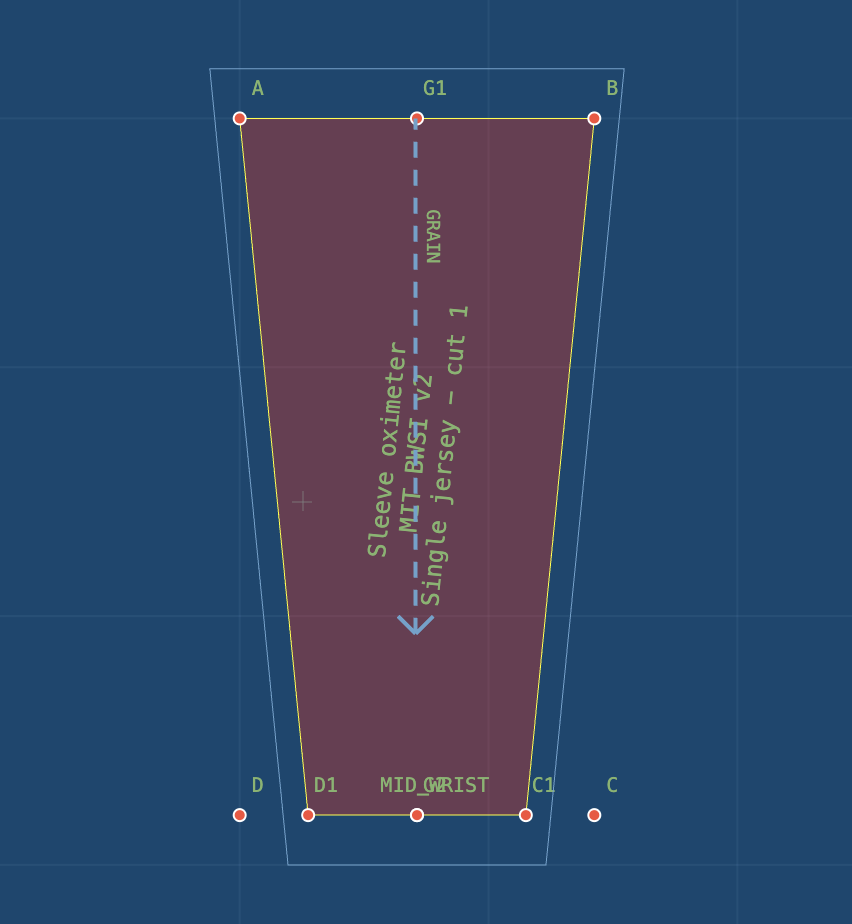
For the physical sleeve, we decided on a three-layer single jersey design, with components sewn into the middle layer using conductive thread and further secured with interfacing to avoid shorting caused by fabric elasticity. Additional pockets were used to contain the sensor, haptic motor, and battery pack. To create our pattern, we used circumference measurements taken from my wrist and upper forearm, then added half an inch of seam allowance, since the flexibility of the material would still ensure a snug fit. The two outer layers helped preserve the structure, and raw fabric edges were sealed with bias tape.
A GitHub repository containing the code for this project can be found here. A few preliminary Arduino sketches were included to test each subsystem, including the infrared sensor, Bluetooth module, and haptic motor. Future extensions could include creating an iOS application to receive and track health metrics over extended periods and enabling the device to contact emergency services if an emergency were detected.